On this page
Where gothic letters come from
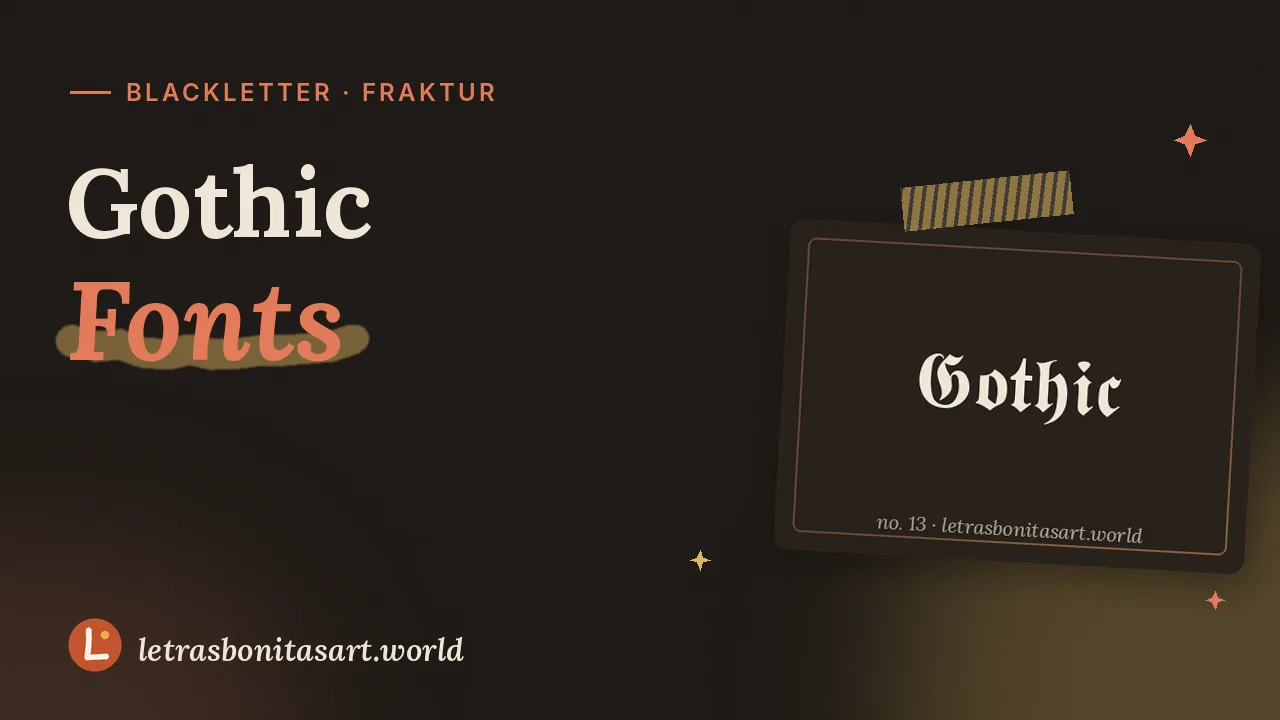
Blackletter grew out of medieval European manuscripts, where scribes packed dense, angular strokes onto expensive parchment. One branch, fraktur, filled German books and newspapers for centuries. Today it lives on in metal album covers, brewery labels and tattoo studios.
Unicode keeps two versions: regular fraktur (𝔊𝔬𝔱𝔥𝔦𝔠) and bold fraktur (𝕲𝖔𝖙𝖍𝖎𝖈).
Choosing your gothic variation
| Variation | Example | Best for |
|---|---|---|
| Medieval Gothic | 𝔑𝔦𝔤𝔥𝔱 | Poetic dark bios |
| Bold Blackletter | 𝕹𝖎𝖌𝖍𝖙 | Names and logos |
| Struck Gothic | 𝔑̶𝔦̶𝔤̶𝔥̶𝔱̶ | A broken, cursed look |
| Gothic Cross | 𝔑†𝔦†𝔤†𝔥†𝔱 | Religious and dark themes |
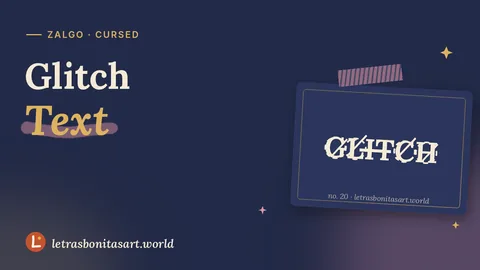
| Gothic Glitch | Letters with noise | Horror and suspense |
Using gothic letters in your artwork
- Keep words short. Letters like 𝔎, 𝔛 and 𝔜 are hard to read in long phrases.
- Capitalize only the first letter. Fraktur was never meant for all-caps.
- Contrast it. Gothic headline plus a plain or small-caps subtitle feels designed, not busy.
Gothic for tattoos
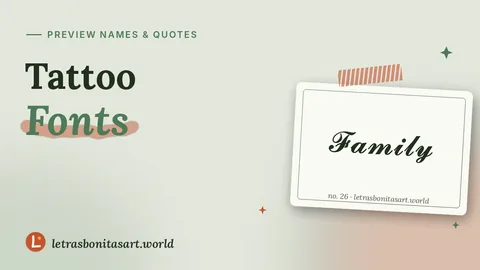
Use the preview as a reference only. A tattoo artist redraws the letters for skin, adjusting weight and spacing. Compare more options in tattoo fonts.
Questions artists ask
What is the gothic font called?
The best-known style is fraktur, a type of blackletter. In Unicode it appears as Mathematical Fraktur.
Do gothic letters include numbers?
No. Unicode has no fraktur digits, so numbers stay plain.
Can I use gothic letters for a tattoo?
As a reference, yes. Ask your artist to redraw it for skin.

Founder and editor of Letras Bonitas Art. Builds the tools and writes the guides on this site for artists who letter on screens. How we review our pages.